
Exploring AI, Open Source, and CWB for Gwangmyeong’s Social Solidarity Economy
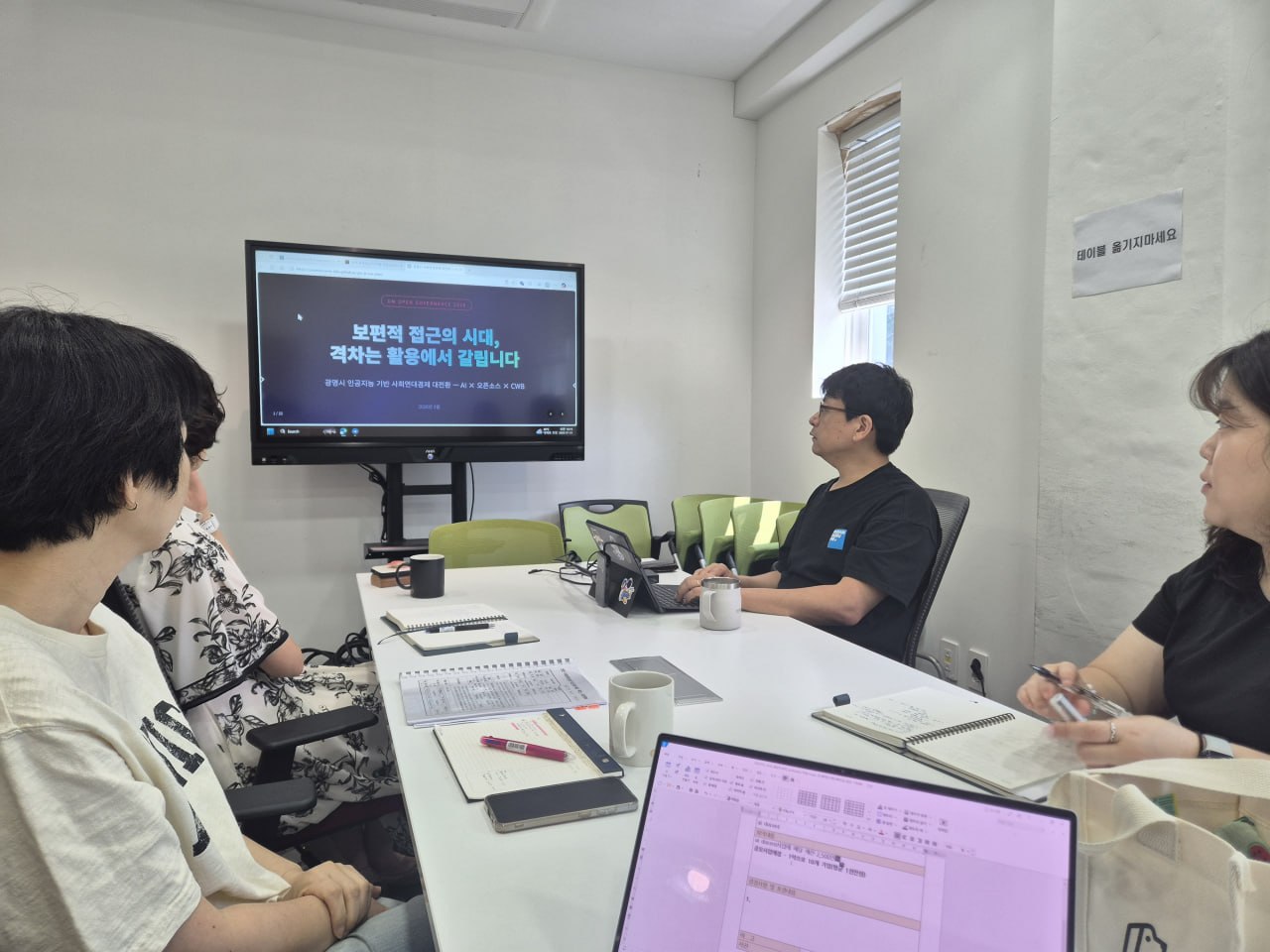
Parandurume met with officials from Gwangmyeong City’s social economy team to discuss how artificial intelligence (AI) can be applied to the city’s social solidarity economy. The discussion focused on AI not merely as an automation tool, but as a public capability that social economy organizations and citizens can use together.
The meeting referenced Parandurume Labs’ proposal, Gwangmyeong Social Solidarity Economy Transformation — AI × Open Source × CWB. The proposal argues that as access to AI becomes more universal, the real divide shifts to whether people and organizations can actually use AI effectively. It outlines a strategy for Gwangmyeong to turn the AI usage gap into a local community asset.
Key proposal areas
- AI docents: citizen digital guides who explain AI in everyday language and help social economy organizations and neighborhoods apply it in practice
- AI skill packages for social enterprises: modular AI workflows for accounting, grant applications, consultation, marketing, data analysis, impact reporting, and website operations
- Open-source standardization: documenting and publishing AI practices validated in Gwangmyeong so they become shared civic infrastructure
- Community Wealth Building (CWB): designing AI adoption so that value, revenue, jobs, and data capabilities circulate within the local economy
- Small libraries as digital commons: expanding 45 small libraries into AI literacy hubs, youth digital shelters, and neighborhood labs
- Gwangmyeong Love Currency analytics: using AI to analyze local-currency spending patterns and strengthen circulation within the city
- Civic participation platforms: exploring open-source tools such as Decidim for policy proposals, participatory budgeting, and local voting
Turning the AI usage gap into a local asset
The proposal begins with the idea that “in the age of universal access, the gap is in usage.” In the past, the digital divide was mainly about access to expensive software, infrastructure, and specialists. Today, many AI tools are widely accessible, but only organizations with the knowledge and confidence to use them can translate access into results.
Parandurume suggested that Gwangmyeong can become a leading city in closing this usage gap. In this model, AI docents help citizens and social economy organizations use AI; young developers build and maintain open-source tools; and Community Wealth Building (CWB) keeps the resulting value, skills, and opportunities circulating locally.
A practical model built by public administration and the social economy
The meeting was an opportunity to connect the practical needs of Gwangmyeong’s social solidarity economy policy with the implementation potential of AI. Parandurume will continue proposing policy ideas and execution models that help social economy organizations improve productivity while strengthening civic participation and local economic circulation.
We will keep working so that AI becomes not just a competitive advantage for a few organizations, but a shared public capability for Gwangmyeong’s social solidarity economy ecosystem.